
Grid-Scale Battery Storage and the Engineering of Reliable Renewables
How iron-air, sodium-ion, and thermal storage facilities are solving the intermittency challenge for clean power grids.

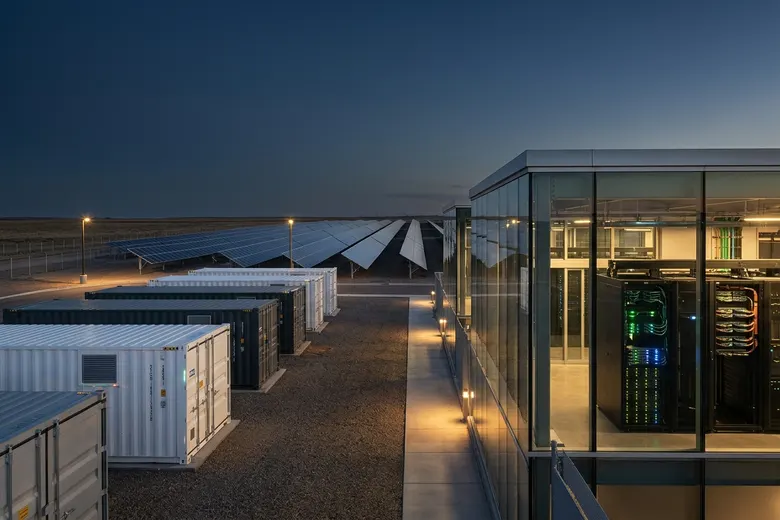
Across most of the globe today, utility-scale solar photovoltaics and onshore wind turbines have become the lowest-cost sources of new electricity generation in history. Yet every grid operator knows that generating cheap kilowatt-hours at noon on a sunny Tuesday is only half of the energy equation. Factories, hospitals, rail networks, and domestic air conditioners require stable voltage at nine o'clock on a windless winter evening.
For years, critics argued that the inherent intermittency of solar and wind power would permanently limit renewable energy to a supplementary role alongside coal and natural gas plants. Today, however, a wave of breakthroughs in electrochemical, mechanical, and thermal energy storage is transforming intermittent generation into dispatchable, around-the-clock baseload power.
"Clean energy becomes foundational industrial baseload the moment grid storage decouples electricity supply from the hourly weather clock."
Beyond Lithium: A Portfolio of Chemistries for Different Clocks
In the early 2020s, grid storage relied almost entirely on lithium-ion battery packs adapted from the electric-vehicle supply chain. Lithium-iron-phosphate batteries excel at short-duration tasks: absorbing midday solar peaks and discharging them over four to six hours during the evening demand ramp, while stabilizing grid frequency within milliseconds.
Yet grid engineers also need medium- and multi-day storage that does not depend on scarce lithium or nickel. That need has accelerated the commercial deployment of sodium-ion batteries—made from abundant table-salt derivatives—and iron-air rust batteries, which store energy over a hundred hours by reversibly oxidizing iron pellets in air at a fraction of the cost per kilowatt-hour of lithium.
Thermal Brick Silos and Pumped Hydro
For heavy industry—such as steel rolling, cement kilns, textile dyeing, and chemical processing—much of the energy demand is not electricity at all, but high-temperature industrial steam and process heat. Innovative thermal storage facilities now use surplus midday renewable electricity to heat insulated silos of refractory firebricks or molten salt above a thousand degrees Celsius, releasing continuous clean steam to factories twenty-four hours a day.
Paired with closed-loop pumped hydro reservoirs in mountainous provinces and modernized high-voltage direct-current transmission lines that link sunny deserts with windy coastlines, multi-technology storage portfolios drastically reduce the need for fossil-fuel peaker plants.
Every technological system encodes choices about who holds accountability, how errors are corrected, and whether human operators remain in command. Engineers who build safety-critical infrastructure—from aviation controls to electrical grids and medical diagnostics—understand that automation works best when it augments human expertise rather than obscuring it behind opaque black boxes. Reliability, inspectability, and graceful failure modes matter far more in practice than marketing demonstrations.
Grid Modernization as Economic Competitiveness
For developing manufacturing economies where industrial workshops frequently suffer voltage sags or rely on expensive diesel backup generators, utility-scale solar-plus-storage microgrids offer an immediate leapfrog opportunity.
The engineering of the twenty-first-century grid is no longer a debate over whether clean power works; it is a race to build the storage reservoirs and transmission lines that deliver it reliably to every socket.
As software and automated decision systems become embedded deeper into civic and industrial life, technical literacy must be paired with institutional wisdom. Open standards, independent security audits, right-to-repair protections, and clear lines of human liability ensure that tools serve the public interest rather than concentrating unaccountable power. True technological progress is measured by how tangibly it elevates human capability and dignity.
The tools we build ultimately reflect the values we choose to honor. When engineers, civic leaders, and everyday users insist on transparency, repairability, and clear human accountability, technology returns to its proper role as a faithful servant of human flourishing rather than an inscrutable master.
In conversations with practitioners, archivists, and local residents across multiple regions, one observation recurs with striking consistency: durable progress is never achieved by shortcutting foundational maintenance. Whether in civic administration, scholarly inquiry, or community stewardship, the discipline of attending to small realities over decades is what separates thriving institutions from brittle ones. When we honor that patient craft, we build a future worthy of our shared inheritance.
More in Technology

The Apprenticeships Returning Craft to Technical Universities
Engineering faculties are pairing theoretical coursework with machine-shop residencies and field maintenance.

Local-First Software and the Movement for Digital Ownership
Why engineers, archivists, and writers are returning to tools that store files directly on the user's machine.

Analog Studios in a Streaming World: Why Musicians Return to Tape
The productive constraints of magnetic tape and live room acoustics are shaping a warmer, more collaborative sound.