
Border Towns as Barometers of Regional Integration
Away from summit communiques, land customs stations and cross-border markets reveal the real state of neighborly diplomacy.

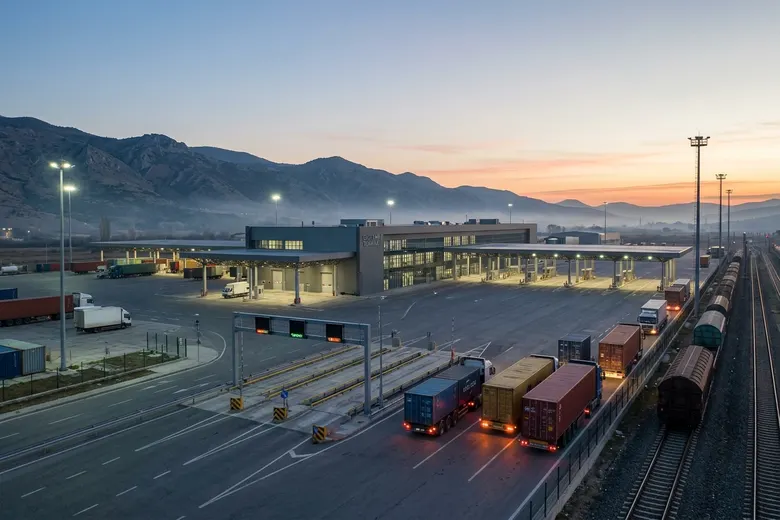
Diplomatic summits in capital cities are masters of the aspirational communique. Leaders shake hands before flags, announce grand visions of regional connectivity, and pledge to double bilateral trade within five years. Yet if you want an honest audit of whether two neighboring nations are actually integrating, skip the banquet hall in the capital and travel to a land border crossing at five o'clock in the morning.
At the frontier town, diplomacy ceases to be rhetorical and becomes physical. Where freight trucks sit idling in six-mile queues for days because customs agencies refuse to recognize one another's laboratory certificates or require duplicate paper stamps across seven windows, regional integration is a fiction. Where trucks clear a single digital window in twenty minutes and local traders cross cleanly to sell seasonal produce, diplomacy is working.
"A border town is the place where foreign policy sheds its abstractions and becomes the daily price of rice, cement, cotton, and medicine."
The High Cost of Administrative Friction
Economists studying intraregional trade in South Asia, East Africa, and parts of Latin America have long pointed out a striking paradox: it is often cheaper and faster for a merchant to ship a container three thousand miles by sea to Europe or East Asia than to move it two hundred miles across a neighboring land border. The barrier is rarely the physical road itself; it is the thicket of non-tariff administrative friction, uncoordinated banking hours, and arbitrary transshipment rules.
When border infrastructure is designed exclusively through the lens of security suspicion rather than regulated commerce, formal trade is strangled while informal smuggling thrives. Ironically, excessive bureaucratic friction at legal crossings undermines both state revenue and border security by pushing ordinary livelihoods into the shadows.
How Single-Window Clearance Transforms Frontier Districts
When neighboring governments invest in integrated check posts—equipped with shared weighbridges, mutual recognition of agricultural and pharmaceutical testing labs, and twenty-four-hour digital cargo pre-clearance—the economic geography of frontier provinces changes rapidly. Districts long treated as neglected cul-de-sacs suddenly become logistics crossroads.
Cold-storage warehouses, packaging workshops, transport repair garages, and small hospitality businesses spring up around modernized land ports. Farmers within fifty miles of the frontier gain access to metropolitan markets on both sides of the line, reducing post-harvest spoilage and stabilizing rural incomes.
Beneath the surface of formal treaties and summit communiqués lies the harder reality of physical geography and infrastructural interdependence. Maritime choke points, undersea fiber-optic cables, cross-border river basins, and regional power grids bind neighboring states together even when diplomatic rhetoric grows strained. Analysts who focus solely on ideological alignments often miss how quiet technical commissions—regulating customs clearance, navigation buoys, and seasonal water sharing—continue to function as vital shock absorbers against miscalculation.
The Human Texture of Cross-Border Kinship
Political borders drawn in the twentieth century frequently sliced through older linguistic, ecological, and family landscapes. Residents of border towns understand instinctively that security and commerce are not opposites: a frontier where neighbors trade legally, share river flood warnings, and maintain regulated market days is far more stable than a militarized wall.
Watching a border town at dawn reminds us that the truest measure of statesmanship is whether it makes life more dignified for the citizens living at the edges of the map.
For middle and emerging powers alike, strategic autonomy in the twenty-first century depends less on theatrical alignments than on domestic institutional capacity. Nations that invest in diversified trade corridors, professional diplomatic corps, and resilient domestic supply chains can navigate multipolar competition without surrendering their sovereign priorities. Realism in foreign affairs begins with recognizing that geography is permanent, neighbors are enduring, and economic vitality is the true foundation of diplomatic weight.
History reminds us that diplomatic architecture endures only when it reflects the lived economic and geographic realities of the peoples it purports to govern. Treaties signed in distant capitals falter quickly if they ignore customs bottlenecks, riverine ecology, or the commercial livelihoods of borderland communities. A sustainable international order must therefore be built from the region upward, grounded in mutual restraint, predictable rules of commerce, and quiet problem-solving.
More in Geopolitics

A world in transition. A different way to see it.
Beyond the pace of the daily ticker, the quiet connections between geography, institutional memory, and everyday life demand a closer look.
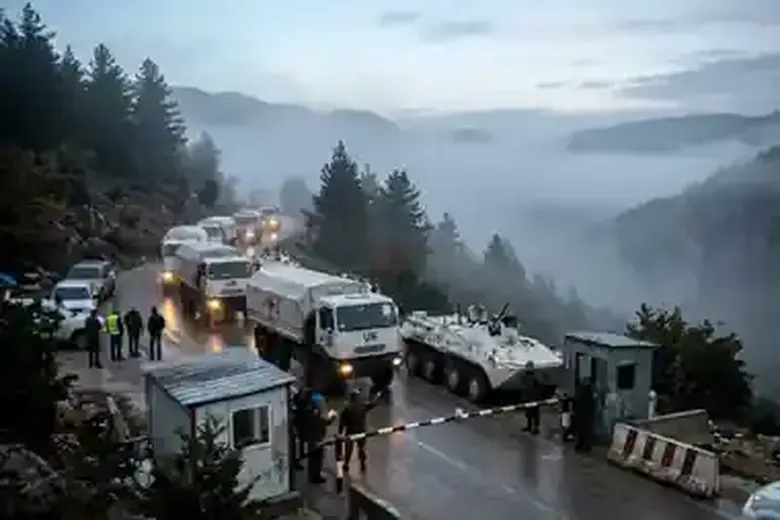
The Logistics of Ceasefires: Why Monitoring Corridors Determine Whether Truces Hold
Beyond summit signatures, the survival of any armistice depends on demarcation maps, hotlines between field commanders, and neutral inspection protocols.

Middle Powers and the New Non-Aligned Calculus
Why mid-sized economies across Asia, Africa, and Latin America are choosing issue-by-issue coalitions over rigid blocs.