
Bilingual Classrooms and the Cognitive Dividend of Mother-Tongue Instruction
Longitudinal research confirms that early literacy in a child's home language accelerates mastery of global tongues.

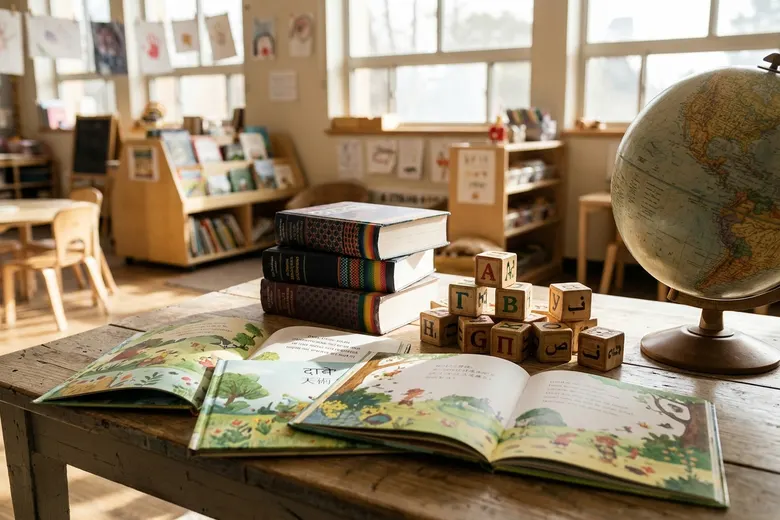
Across post-colonial societies and immigrant-rich metropolises alike, anxious parents often face an agonizing pedagogical choice. Convinced that fluency in English is the sole passport to economic mobility, many families and school boards push for exclusive English-medium instruction from the very first day of kindergarten, treating the child's mother tongue as a domestic habit to be left at the schoolhouse gate.
Yet four decades of rigorous longitudinal research in cognitive neuroscience, developmental linguistics, and comparative education point to the exact opposite conclusion. Children who build strong foundational literacy and conceptual reasoning in their home language during the primary grades not only achieve higher proficiency in mathematics and science, but ultimately master English with greater grammatical depth and vocabulary range than peers plunged prematurely into rote monolingual immersion.
"A child who honors and masters the language of their home walks into the global classroom with two lenses on reality instead of one."
How Conceptual Transfer Works in the Developing Brain
When a six-year-old child learns to read in the language they already speak at the family dinner table, they are connecting written symbols to a rich, existing universe of spoken meaning, storytelling, and emotional nuance. Once the cognitive architecture of decoding text, structuring a paragraph, and reasoning through abstract cause and effect is established in the mother tongue, those underlying skills transfer seamlessly to a second or third language.
Conversely, when a young child is forced to learn both basic literacy and unfamiliar subject concepts in a language they barely understand, classroom learning frequently degenerates into mechanical memorization. Students copy definitions from the blackboard without grasping their meaning, developing a fragile surface fluency that fractures when higher-order analytical writing is required in secondary school.
Executive Function and Bilingual Flexibility
Neuroimaging studies of balanced bilinguals reveal that regularly navigating between two linguistic systems strengthens the brain's executive control network—the regions responsible for selective attention, switching between tasks, and evaluating competing interpretations. Because a bilingual student knows from childhood that the same object or emotion can be named and framed in multiple ways, they develop an early metalinguistic awareness that aids both creative writing and logical analysis.
Moreover, structured dual-language classrooms preserve vital cultural continuity. When a school treats both the mother tongue and the global lingua franca as languages of scholarship and literature, students are spared the false choice between academic ambition and family belonging.
Inside classrooms and lecture halls, every teacher knows that genuine intellectual formation cannot be reduced to standardized rubric scores or algorithmic modules. Learning is fundamentally a relational human encounter—built on curiosity, patient mentorship, and the willingness to wrestle with complex texts and unfamiliar problems. When educational institutions prioritize administrative compliance over classroom autonomy, both teachers and students lose the space required for deep critical inquiry.
Designing Rigorous Dual-Language Curricula
The most effective educational systems—from Scandinavian and Swiss cantonal schools to dual-language academies in North America and Asia—pair strong mother-tongue foundations in early grades with systematic, literature-rich instruction in global languages.
True cosmopolitanism never requires erasing one's first voice; it begins by giving children deep roots in their own tongue so they can speak to the world with confidence.
Rebuilding educational excellence requires investing directly in the human core of the school: well-stocked libraries, rigorous foundational curricula in literacy and mathematics, hands-on laboratory and vocational workshops, and respected educators who are given the time to mentor individual students. The true measure of an education system is not the volume of credentials it issues, but the independence of mind and civic character its graduates carry into adulthood.
Every generation must decide whether it views education merely as a sorting mechanism for the labor market or as the sacred transmission of human civilization. When we give teachers the freedom to inspire and students the time to read deeply, question rigorously, and master practical crafts, we renew the intellectual commons on which both democracy and human flourishing depend.
More in Education
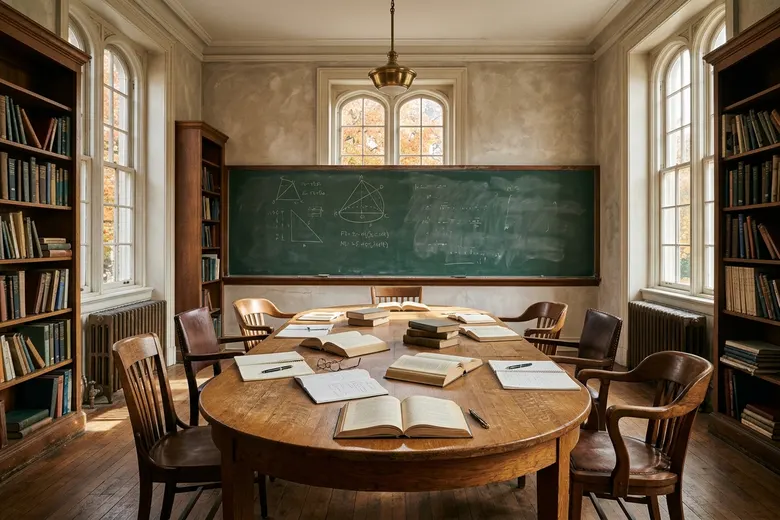
What should a classroom prepare us for?
Teachers, students, and the enduring possibilities of an education that reaches far beyond the examination hall.

Grassroots Cricket Academies and the Economics of Local Talent
From district maidans to regional tape-ball leagues, how community coaching networks discover tomorrow's pacers.

The Apprenticeships Returning Craft to Technical Universities
Engineering faculties are pairing theoretical coursework with machine-shop residencies and field maintenance.