
A world in transition. A different way to see it.
Beyond the pace of the daily ticker, the quiet connections between geography, institutional memory, and everyday life demand a closer look.


Every generation convinces itself that it is living through an unprecedented rupture in human affairs, yet the deeper currents of history rarely move at the speed of our anxieties. When we step away from the relentless cadence of breaking notifications and observe how ordinary communities actually absorb political and economic shocks, a very different picture emerges. In riverfront grain markets, municipal reading rooms, port customs sheds, and family-run workshops, change is neither an abstract theory nor a sudden catastrophe; it is a patient negotiation between inherited habits and new necessities.
Public debate often treats global transformation as a grand chessboard managed exclusively by central bankers, cabinet ministers, and corporate executives. That view flatters those in power while overlooking the true stabilizers of any society. When energy prices fluctuate, when trade routes shift across oceans, or when demographic balances tilt between countryside and metropolis, the real work of adaptation happens on the ground. A neighborhood pharmacist extends informal credit during a lean month; a vocational instructor rewrites a syllabus to match new machinery; a port logistics clerk finds a secondary rail corridor when a canal slows down. These quiet adjustments rarely make headlines, yet they are the mortar that keeps civilization standing.
"To understand where a society is truly heading, look less at the volume of its public arguments and more at the everyday obligations its citizens refuse to abandon."
The Illusion of Instantaneous Change
Modern communication systems are engineered to reward immediacy over proportion. A minor diplomatic friction, a single quarterly earnings miss, or a passing cultural controversy is amplified within minutes into an existential drama. Under such conditions, citizens are left with an abundance of raw data but a chronic shortage of historical perspective. When every event is presented at maximum volume, our ability to distinguish between a temporary squall and a genuine tectonic shift steadily erodes. We begin to mistake motion for progress and noise for significance.
Historians who study major transitions—such as the shift from agrarian to industrial economies in the nineteenth century, or the reconstruction of international trade after 1945—consistently note that the most durable transformations were almost invisible in daily newspapers of the period. Gradual improvements in municipal sanitation, the standardization of commercial law, the expansion of primary literacy, and the building of regional rail networks altered human life far more profoundly than the parliamentary scandals that dominated contemporary front pages. Learning to see our own era clearly requires recovering that sense of structural proportion.
Why Geography and Local Institutions Still Matter
Three decades ago, it was fashionable to predict that digital networks and frictionless global finance would render physical geography obsolete. Distance, we were told, had died; every city would soon resemble every other city in a flat, uniform marketplace. Experience has taught us otherwise. Soil chemistry in a river delta, the depth of a natural harbor, the trust accumulated over generations in a regional trade guild, and the civic culture of a town library remain stubbornly decisive. Global capital and digital tools do not float in a vacuum—they take root only where local institutions provide stability, skill, and social trust.
Consider how differently two industrial towns respond to the same external economic shock. In a municipality where technical colleges, small credit unions, and civic associations maintain close ties with local workshops, displaced workers and proprietors often pivot toward new lines of fabrication within a few years. Where those intermediate institutions have been hollowed out, the same shock leaves behind decades of stagnation. Power and prosperity are never merely macroeconomic statistics; they are the visible harvest of local civic health.
When we examine the institutional architecture behind these developments, a recurring pattern emerges across both municipal and national scales. Decision-makers frequently rely on short-term quantitative metrics that capture immediate throughput while ignoring long-term structural resilience. In field interviews with planners, civil engineers, and local administrators, the consensus is unmistakable: sustainable reform requires aligning fiscal incentives with multi-decade maintenance rather than electoral or quarterly cycles. Where communities have preserved independent oversight boards and transparent procurement archives, public trust remains measurably higher even during periods of fiscal tightening.
Recovering the Discipline of Patient Observation
Seeing a world in transition requires an intellectual temperament that resists easy slogans. In an examination room or a policy seminar, the strongest analysis is never the one that merely repeats partisan talking points; it is the one that weighs competing evidence, traces cause and effect across time, and acknowledges the human complexity of those who disagree. The same standard belongs in our public reading life. When we allow ourselves to read at length and think in decades rather than hours, the world ceases to look like a chaotic series of emergencies and reveals its underlying patterns.
Ultimately, attention is the most precious civic resource we possess. What we choose to notice—and how patiently we are willing to examine it—shapes the quality of our judgment as citizens, neighbors, and stewards of the institutions we will hand on to the next generation.
Looking ahead, the decisive test for civic leadership will not be the announcement of grand master plans, but the quiet, unglamorous repair of everyday systems. Whether managing port logistics, municipal water tables, or regional transport corridors, the societies that thrive are those that treat institutional memory as a public commons. Only by uniting empirical rigor with respect for local lived experience can policy move beyond rhetorical ambition toward lasting civic durability.
More in Weekline Exclusive
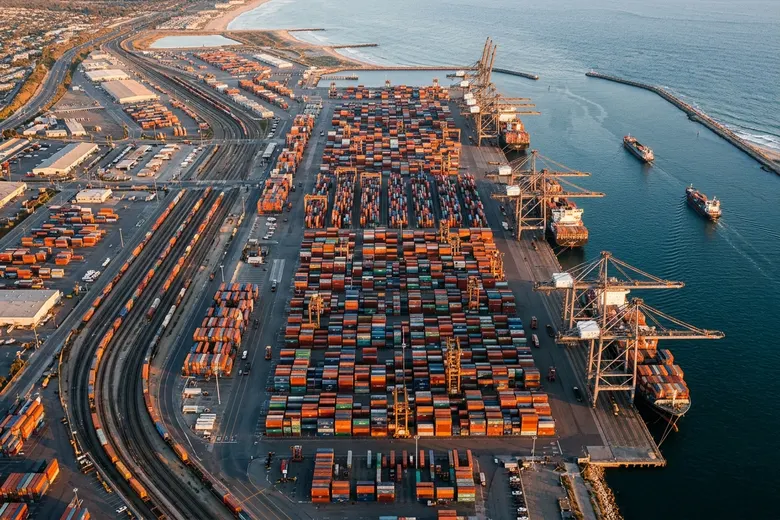
Inside the Quiet Diplomacy Reshaping Maritime Trade Corridors
From the Bay of Bengal to the Red Sea, port authorities and regional envoys are drafting new rules for commercial resilience.

The Architecture of Public Trust in an Era of Synthetic Media
Why provenance standards, primary documentation, and transparent verification are becoming essential civic infrastructure.

The Quiet Crisis of Attention in Public Life and What Reading Restores
Why the ability to sit with a complex argument for thirty minutes has become the defining civic skill of our generation.