
Middle Powers and the New Non-Aligned Calculus
Why mid-sized economies across Asia, Africa, and Latin America are choosing issue-by-issue coalitions over rigid blocs.


Walk into the foreign ministry of almost any mid-sized nation in South Asia, Southeast Asia, the Middle East, or Latin America today, and you will hear diplomats speaking a remarkably consistent language. Unlike the twentieth-century Cold War, when states were pressured to declare total ideological allegiance to one of two rival camps, today's middle powers are practicing a disciplined strategy of multi-alignment—building modular partnerships tailored to specific national interests.
A single country may simultaneously partner with European engineering consortia on offshore wind grids, rely on East Asian supply chains for telecommunications and industrial machinery, cooperate with the United States on maritime domain awareness and higher education, and settle energy imports through regional clearing mechanisms. Far from reflecting diplomatic indecision, this approach represents a clear-eyed reading of twenty-first-century economic geography.
"In a multipolar era, true strategic autonomy is measured not by isolation, but by the diversity of a nation's indispensable partnerships."
Why Economic Interdependence Defies Bloc Politics
During the original Non-Aligned Movement of the 1950s and 1960s, newly independent nations possessed relatively small shares of global manufacturing and financial liquidity. Their non-alignment was primarily a moral and diplomatic shield against great-power entanglement. Today's middle powers occupy a fundamentally different position: they are home to the majority of the world's working-age population, critical mineral reserves, semiconductor assembly plants, and fastest-growing consumer markets.
Because their domestic stability depends on creating millions of industrial and service jobs each year, these governments view exclusive trade walls as a direct threat to national development. Severing access to Western consumer markets or Asian component ecosystems would cripple their own industrialization. Multi-alignment is therefore the foreign-policy expression of domestic economic pragmatism.
The Rise of Minilateral and Corridor Coalitions
As traditional global institutions like the UN Security Council and the World Trade Organization struggle with great-power gridlock, middle powers are increasingly turning to focused, three- or four-nation minilateral agreements. These compacts bypass ideological grandstanding to solve concrete problems: harmonizing digital customs codes along a rail corridor, establishing joint coast-guard patrols against piracy, or pooling sovereign wealth funds for agricultural logistics.
Such coalitions are nimble precisely because membership is functional rather than doctrinal. Two states that disagree on distant geopolitical questions can still co-finance a hydroelectric transmission line or a subsea fiber-optic cable that lowers costs for both populations.
Beneath the surface of formal treaties and summit communiqués lies the harder reality of physical geography and infrastructural interdependence. Maritime choke points, undersea fiber-optic cables, cross-border river basins, and regional power grids bind neighboring states together even when diplomatic rhetoric grows strained. Analysts who focus solely on ideological alignments often miss how quiet technical commissions—regulating customs clearance, navigation buoys, and seasonal water sharing—continue to function as vital shock absorbers against miscalculation.
The Diplomatic Craft of Strategic Patience
Practicing multi-alignment requires a high degree of diplomatic skill. Mid-sized states must maintain transparent red lines regarding their own territorial and regulatory sovereignty while resisting coercive pressure from larger powers demanding exclusivity.
As the twenty-first century matures, the international order will be shaped less by the ultimatums of superpowers than by the quiet refusal of middle powers to let their futures be narrowed into a binary choice.
For middle and emerging powers alike, strategic autonomy in the twenty-first century depends less on theatrical alignments than on domestic institutional capacity. Nations that invest in diversified trade corridors, professional diplomatic corps, and resilient domestic supply chains can navigate multipolar competition without surrendering their sovereign priorities. Realism in foreign affairs begins with recognizing that geography is permanent, neighbors are enduring, and economic vitality is the true foundation of diplomatic weight.
History reminds us that diplomatic architecture endures only when it reflects the lived economic and geographic realities of the peoples it purports to govern. Treaties signed in distant capitals falter quickly if they ignore customs bottlenecks, riverine ecology, or the commercial livelihoods of borderland communities. A sustainable international order must therefore be built from the region upward, grounded in mutual restraint, predictable rules of commerce, and quiet problem-solving.
More in Geopolitics

A world in transition. A different way to see it.
Beyond the pace of the daily ticker, the quiet connections between geography, institutional memory, and everyday life demand a closer look.

The Logistics of Ceasefires: Why Monitoring Corridors Determine Whether Truces Hold
Beyond summit signatures, the survival of any armistice depends on demarcation maps, hotlines between field commanders, and neutral inspection protocols.
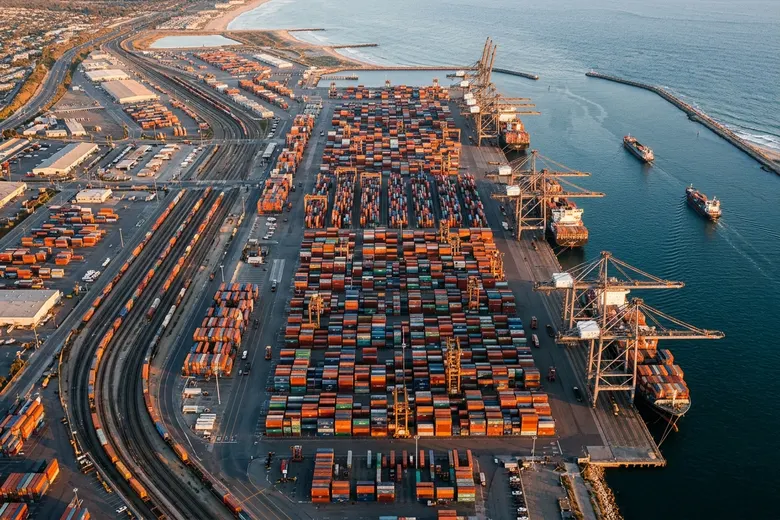
Inside the Quiet Diplomacy Reshaping Maritime Trade Corridors
From the Bay of Bengal to the Red Sea, port authorities and regional envoys are drafting new rules for commercial resilience.