
Small enterprises. A larger story of possibility.
Looking closely at the proprietors, apprenticeships, and patient capital behind the neighborhood economy.


Economic commentary in major financial capitals has a habit of measuring national vitality almost exclusively through stock index records, venture capital valuations, and multinational mergers. Yet the everyday stability of any real economy rests on enterprises that never ring an exchange bell: family-owned machine shops, neighborhood bakeries, regional grain millers, independent pharmacies, and small garment ateliers.
Over the past five years, as global supply chains buckled under pandemic disruptions, shipping bottlenecks, and sharp interest-rate hikes, it was these modest proprietors who absorbed the shock without abandoning their streets. While speculative startups rose and collapsed with the tide of cheap credit, neighborhood businesses survived by relying on older, sturdier disciplines: conservative balance sheets, deep supplier relationships, and face-to-face accountability with the customers they see every morning.
"The corner enterprise does far more than circulate currency; it anchors social trust and practical skill on the block long after corporate branches consolidate."
The Economics of Reputation and Staying Put
In textbook microeconomics, transactions are often modeled as anonymous exchanges between rational strangers optimizing purely for the lowest unit price. Anyone who has ever run or relied upon a small enterprise knows that real commerce operates on a very different foundation. When a proprietor expects to remain on the same street for thirty years—and hopes to pass the business to a son, daughter, or senior apprentice—short-term opportunism becomes self-defeating.
Reputation in a local market is an intangible asset built over thousands of small, honest interactions: replacing a defective part without argument, keeping essential goods in stock during a storm, or training young school-leavers in their first trade. This embeddedness creates a natural alignment between commercial survival and neighborhood welfare that distant absentee ownership rarely replicates.
Working Capital and the Credit Gap
Despite generating the majority of domestic employment in both developing and advanced economies, small and medium enterprises consistently face the steepest hurdles when seeking working capital. As large commercial banks have closed local branches and replaced experienced loan officers with standardized algorithmic credit scoring, proprietors whose businesses follow seasonal or craft cycles often find themselves underserved.
Where regional cooperative banks, community development financial institutions, and supplier-credit networks remain strong, small enterprises demonstrate remarkable productivity gains. Investing in a new CNC lathe, a solar cold-storage unit, or digital inventory accounting doesn't require billions in speculative capital; it requires modest, predictably priced credit paired with practical technical extension services.
In the real economy of factories, family enterprises, logistics hubs, and regional banks, long-term profitability has always rested on operational discipline rather than speculative financial engineering. Enterprises that endure across multiple business cycles tend to share distinct traits: conservative debt levels, deep investment in workforce training, transparent supplier relationships, and an obsession with product reliability. When management teams prioritize productive capability over short-term share price theatrics, they build organizations capable of weathering credit contractions and supply disruptions.
Renewal From the Street Up
When policymakers design industrial strategies focused solely on attracting giant external factories with tax holidays, they often overlook the dense web of local workshops already operating in their cities. True economic resilience grows from the bottom up, when thousands of small enterprises are given fair tax administration, reliable power and transport infrastructure, and the room to compound their craft across generations.
Every shutter raised at dawn on a neighborhood commercial street is a quiet vote of confidence in the future. Supporting those proprietors is the surest way to build an economy that is both productive and humane.
For entrepreneurs and commercial leaders navigating today’s shifting interest-rate and trade environment, the lesson is straightforward. Durable enterprise value is created on the shop floor, in the research laboratory, and at the customer service counter. Markets eventually reward businesses that solve tangible human problems with honesty, craftsmanship, and prudent capital stewardship.
Across every sector of commerce, the distinction between transient speculation and enduring enterprise eventually becomes unmistakable. Firms that treat their workers as skilled partners, their suppliers as long-term allies, and their customers as neighbors build a reservoir of reputation that no quarterly downturn can erase. Honest stewardship remains the most reliable competitive advantage in economic life.
More in Business

The geography of a changing global conversation
How emerging port corridors, regional coalitions, and diaspora networks are redrawing the map of influence.
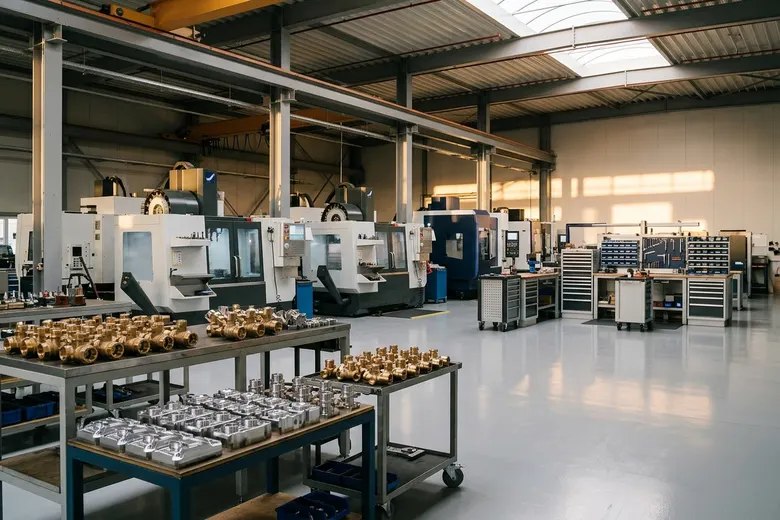
Family-Owned Manufacturers and the Art of Patient Capital
How multi-generational mid-sized firms outlast market downturns by prioritizing balance-sheet resilience and craft.

Why Inflation Statistics Miss the Lived Cost of Urban Housing
Headline consumer price indices flatten out the fixed shelter, transit, and utility burdens reshaping household budgets.