
Sacred Calendars in Secular Metropolises: How Cities Keep Time
From lunar fasts to harvest processions, pluralistic cities beat to overlapping rhythms of remembrance and hospitality.

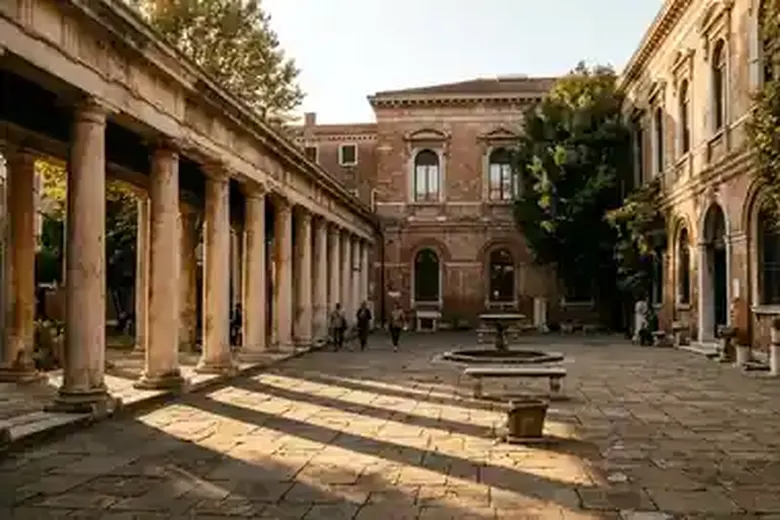
The modern commercial metropolis likes to imagine its time as uniform, mechanical, and strictly linear—measured in twenty-four-hour trading sessions, quarterly earnings reports, and synchronized atomic server clocks. Yet step out onto the avenues of any great pluralistic city across the span of a year, and you discover that urban life actually moves to a rich, overlapping polyrhythm of sacred and seasonal calendars.
In the same municipal district, the lunar progression of Ramadan and Eid al-Fitr, the autumn drums and lanterns of Durga Puja and Diwali, the solemnity of Yom Kippur and Lent, and the solar renewal of Pahela Baishakh or Lunar New Year each transform the sensory texture of the street. Bakeries change their window trays; working hours shift toward twilight or dawn; and public parks fill with families dressed in festive textiles.
"A truly pluralistic city does not flatten sacred time into bland uniformity; it learns the civic hospitality of sharing the calendar."
Why Human Beings Need Qualitative Time
Philosophers and anthropologists have long observed that human consciousness struggles when every day of the year feels identical to every other day. Purely quantitative time—an endless conveyor belt of workweeks interrupted only by solitary consumption—breeds exhaustion and social atomization. Sacred and cultural calendars introduce qualitative time: seasons of fasting and self-examination followed by seasons of feasting, debt forgiveness, almsgiving, and family reunion.
Even for urban residents who consider themselves thoroughly secular, these recurring neighborhood observances provide a shared temporal horizon. They remind the hurried commuter that life is punctuated by obligations older and deeper than the office inbox.
Municipal Governance and the Etiquette of Shared Space
Accommodating overlapping calendars in a high-density city requires practical civic craft. Thoughtful municipal administrations coordinate street-cleaning schedules, temporary pedestrian markets, late-night transit extensions, and noise variances so that one community's celebration enhances rather than disrupts the neighborhood.
Just as importantly, civic schools and workplaces that grant flexible holiday observance allow employees and students from minority traditions to participate fully in public life without feeling forced to conceal their heritage. That institutional recognition transforms diversity from a demographic statistic into lived mutual respect.
Across generations, cultural and spiritual traditions have endured not by sealing themselves off from historical change, but by offering communities a moral vocabulary to interpret change without losing their shared identity. In neighborhood gathering halls, parish kitchens, courtyard libraries, and seasonal festivals, rituals of hospitality and mutual aid create bonds of reciprocity that neither commercial markets nor state bureaucracies can manufacture. These shared rhythms give individuals a sense of belonging that transcends transactional self-interest.
The Table That Reaches Across the Street
Perhaps the most enduring custom across almost every religious and cultural calendar is the sharing of food with neighbors beyond one's own household. When plates of festive sweets, dates, or harvest bread are carried across apartment landings to families of different faiths, neighborhood trust is renewed without a single committee meeting.
In keeping time together across traditions, a city discovers that its differences are not fault lines to be feared, but the very cadences that give urban life its warmth and depth.
In an era marked by digital fragmentation and rapid urban mobility, preserving these cultural commons is a matter of urgent social health. When younger generations engage with inherited texts, artisanal crafts, and communal ethics, they are not retreating into nostalgia; they are recovering practical wisdom about stewardship, humility, and neighborly obligation. A society that honors its cultural roots while remaining open to dialogue possesses a moral compass capable of guiding it through periods of profound uncertainty.
What endures across centuries of cultural transformation is the quiet human hunger for meaning, reverence, and shared moral obligation. Neither technological convenience nor material abundance can substitute for the warmth of a community that remembers its ancestors, welcomes the stranger, and gathers to mark the seasons of life together. In protecting these living traditions, a society protects the very soul of its civic life.
More in History, Religion & Culture

The places where faith and everyday life meet
A cultural essay about shared courtyards, inherited traditions, and the quiet grammar of belonging.

The rhythm of a city, heard from the sidelines
An exploration of creative life, shared passions and the quiet culture of neighborhood participation.

The Art of the Literary Translator: Carrying Metaphor and Silence Across Borders
Why translating a novel or poem between languages requires reconstructing cultural rhythm rather than merely substituting dictionary equivalents.