
Educational Exchanges and Cultural Diplomacy in a Fractured World
Why student fellowships, scholarly translation, and artistic corridors outlast the chill of official statecraft.

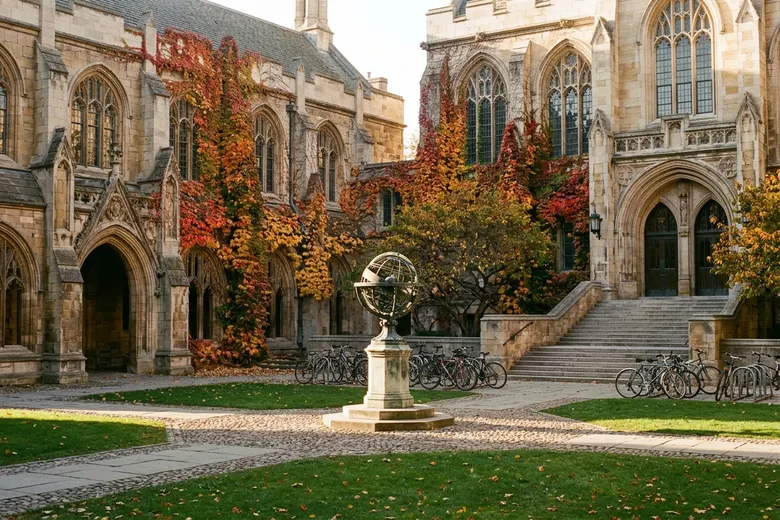
Whenever diplomatic relations between major nations cool and trade tariffs rise, the first budgets cut by short-sighted legislatures are almost always scholarly exchanges, language fellowships, and cultural visiting programs. Hard-nosed political commentators dismiss these initiatives as sentimental soft-power luxuries—pleasant enough in peacetime, but irrelevant when strategic competition sharpens. History suggests that this view gets reality exactly backward.
The moments when official state-to-state communication becomes rigid and suspicious are precisely the moments when societies most need citizens who can read one another's languages, understand one another's historical memories, and pick up a telephone to speak with a former university classmate in a foreign capital.
"Treaties are signed by ministers, but lasting peace between societies is carried by the students, translators, and musicians who have lived at one another's tables."
The Long Horizon of the Visiting Scholar
Trace the biographies of the diplomats, economists, educators, and scientists who quietly defused crises or built trade and scientific bridges over the past seventy years, and you repeatedly find a formative year spent as an exchange student in a foreign university. A twenty-two-year-old who spends twelve months studying engineering, history, or music in another country learns something no intelligence briefing can ever convey: that a foreign nation is not a monolithic caricature, but a complex society of families, regional debates, humor, and shared human aspirations.
Thirty years later, when those former students rise to lead ministries, university faculties, or commercial enterprises, that lived familiarity acts as a crucial circuit breaker against dehumanizing propaganda.
Translation and Musical Exchange as Honest Bridges
Cultural diplomacy succeeds only when it is practiced as a two-way street of mutual curiosity rather than one-way national advertising. When a conservatory in New York or London hosts master musicians from Bengal or West Africa—not as exotic curiosities, but as visiting professors of rhythmic and melodic theory—and when translators bring contemporary essays and novels across linguistic borders in both directions, genuine intellectual parity is established.
Shared scholarly projects—such as joint archaeological surveys, monsoon climate modeling, or comparative educational research—keep vital channels of professional respect open even when parliamentary rhetoric turns strident.
Beneath the surface of formal treaties and summit communiqués lies the harder reality of physical geography and infrastructural interdependence. Maritime choke points, undersea fiber-optic cables, cross-border river basins, and regional power grids bind neighboring states together even when diplomatic rhetoric grows strained. Analysts who focus solely on ideological alignments often miss how quiet technical commissions—regulating customs clearance, navigation buoys, and seasonal water sharing—continue to function as vital shock absorbers against miscalculation.
Keeping the Doors of the University Open
Visa barriers and bureaucratic suspicion that wall off universities from international students ultimately impoverish the host nation's own intellectual vitality.
A confident nation never fears the exchange of ideas; it recognizes that every foreign student welcomed into a seminar room becomes a lifelong bridge of understanding.
For middle and emerging powers alike, strategic autonomy in the twenty-first century depends less on theatrical alignments than on domestic institutional capacity. Nations that invest in diversified trade corridors, professional diplomatic corps, and resilient domestic supply chains can navigate multipolar competition without surrendering their sovereign priorities. Realism in foreign affairs begins with recognizing that geography is permanent, neighbors are enduring, and economic vitality is the true foundation of diplomatic weight.
History reminds us that diplomatic architecture endures only when it reflects the lived economic and geographic realities of the peoples it purports to govern. Treaties signed in distant capitals falter quickly if they ignore customs bottlenecks, riverine ecology, or the commercial livelihoods of borderland communities. A sustainable international order must therefore be built from the region upward, grounded in mutual restraint, predictable rules of commerce, and quiet problem-solving.
In conversations with practitioners, archivists, and local residents across multiple regions, one observation recurs with striking consistency: durable progress is never achieved by shortcutting foundational maintenance. Whether in civic administration, scholarly inquiry, or community stewardship, the discipline of attending to small realities over decades is what separates thriving institutions from brittle ones. When we honor that patient craft, we build a future worthy of our shared inheritance.
More in Geopolitics
A world in transition. A different way to see it.
Beyond the pace of the daily ticker, the quiet connections between geography, institutional memory, and everyday life demand a closer look.
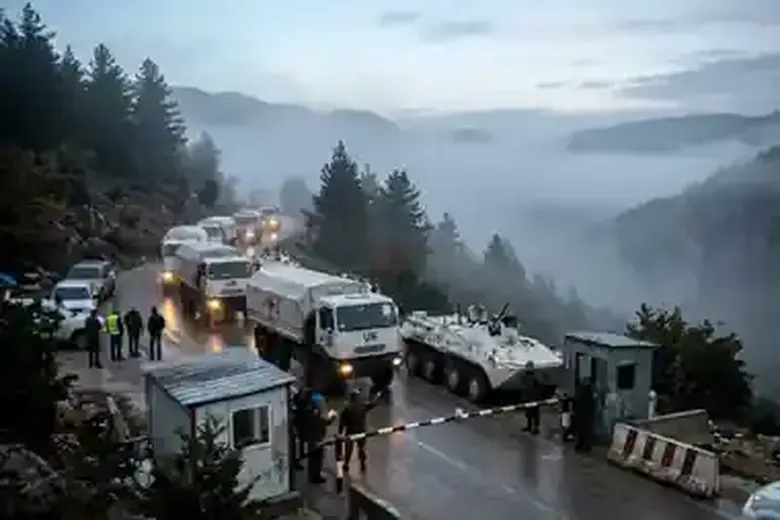
The Logistics of Ceasefires: Why Monitoring Corridors Determine Whether Truces Hold
Beyond summit signatures, the survival of any armistice depends on demarcation maps, hotlines between field commanders, and neutral inspection protocols.

Middle Powers and the New Non-Aligned Calculus
Why mid-sized economies across Asia, Africa, and Latin America are choosing issue-by-issue coalitions over rigid blocs.