
The Ethics of the Pen: Responsibility and Humility in Public Writing
Why writing for the public requires a commitment to truth, proportion, and respect for the reader's conscience.


Anyone who places words before the public—whether as a reporter, an essayist, a historian, or a teacher—enters into a quiet ethical contract with strangers they will never meet in person. A reader who gives you fifteen minutes of their evening is lending you a piece of their life and trusting that you have done the honest work required to deserve their attention. In an era when publishing a sentence to the world takes a single click, remembering the moral weight of the pen has never been more urgent.
Too much contemporary commentary is written as if words were weightless projectiles meant to score points for a faction before noon and be forgotten by dusk. Yet words shape the mental climate in which societies live; they can either clarify complex realities or poison the wells of public trust.
"The first duty of the writer is not to sound clever or righteous, but to be scrupulously fair to the evidence and to the human beings described on the page."
The Discipline of Steel-Manning the Other Side
In any serious analytical essay or examination of a controversial issue, the easiest—and most dishonest—rhetorical trick is to caricature the opposing view at its weakest, knock down that straw man, and declare victory. A writer of integrity practices the opposite discipline: before criticizing an opposing policy or philosophical position, they state that position in its strongest, most coherent form, so that a thoughtful proponent of that view would recognize it as fair.
When a writer demonstrates that they have genuinely understood the competing arguments and the real constraints faced by decision-makers, their eventual conclusion carries ten times the persuasive moral force of a partisan tirade.
Language Freed from Buzzwords and Cliches
Clarity of prose is itself an ethical obligation. As the great essayists of every language have observed, inflated jargon, bureaucratic euphemisms, and repetitive ideological slogans are frequently used to conceal a lack of concrete thought—or to numb the reader to human suffering.
Choosing plain, vivid, concrete nouns and everyday verbs forces the writer to think honestly. If an argument cannot be stated in clear, humane prose without leaning on fashionable buzzwords, the writer has not yet thought the problem through.
In our quieter moments away from public performance, most of us recognize that a meaningful life is measured less by the velocity of our achievements than by the quality of our attention. Philosophy and personal reflection have never been mere academic exercises; since antiquity, they have served as practical disciplines for ordering our desires, governing our impatience, and clarifying our duties to those around us. Solitude and unhurried reading allow us to examine our own assumptions before we project them onto the world.
Humility Before the Complexity of the World
Finally, ethical writing requires the humility to admit what we do not know. The world is larger than any single ideology, and human motives are rarely pure.
A writer who approaches the page with curiosity rather than arrogance invites the reader into a shared search for truth—and that companionship is the highest reward of the literary craft.
Cultivating an inner life of depth requires deliberate boundaries against the machinery of perpetual distraction. By reclaiming time for unscripted conversation, careful journaling, and patient observation of the natural and civic world, we restore our capacity for independent moral judgment. Thoughtfulness is not a retreat from action—it is the soil from which wise and humane action grows.
If we wish to recover a steadier sense of purpose in an age of noise, we must begin with the small, daily choices of where we place our attention. An hour given to patient reading, an unhurried walk with a friend, or honest reflection at the close of day quietly reshapes our character—reminding us that wisdom is always grown slowly.
In conversations with practitioners, archivists, and local residents across multiple regions, one observation recurs with striking consistency: durable progress is never achieved by shortcutting foundational maintenance. Whether in civic administration, scholarly inquiry, or community stewardship, the discipline of attending to small realities over decades is what separates thriving institutions from brittle ones. When we honor that patient craft, we build a future worthy of our shared inheritance.
More in Thoughts

The places where faith and everyday life meet
A cultural essay about shared courtyards, inherited traditions, and the quiet grammar of belonging.

The case for thinking beyond the next headline
A reflective column on attention, historical proportion, and the quiet discipline of asking better questions.
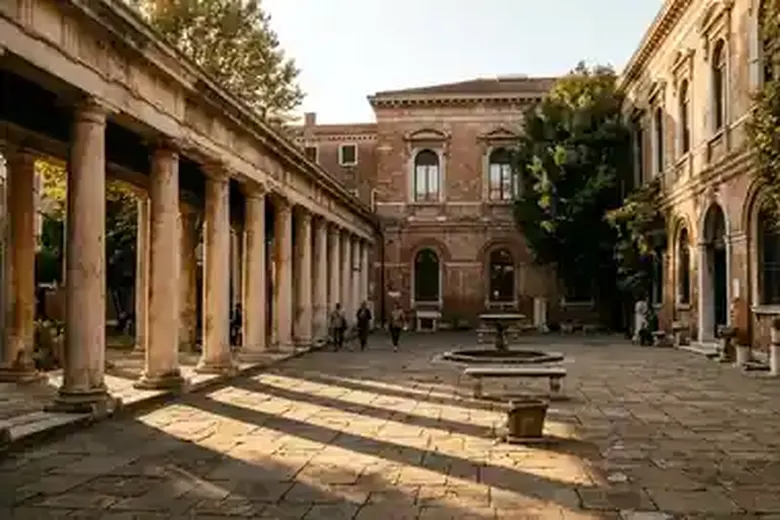
Sacred Calendars in Secular Metropolises: How Cities Keep Time
From lunar fasts to harvest processions, pluralistic cities beat to overlapping rhythms of remembrance and hospitality.