
Physical Education, Play, and the Forgotten Link Between Body and Mind
Why daily unscripted outdoor movement in schools is essential for cognitive focus, mental health, and lifelong resilience.

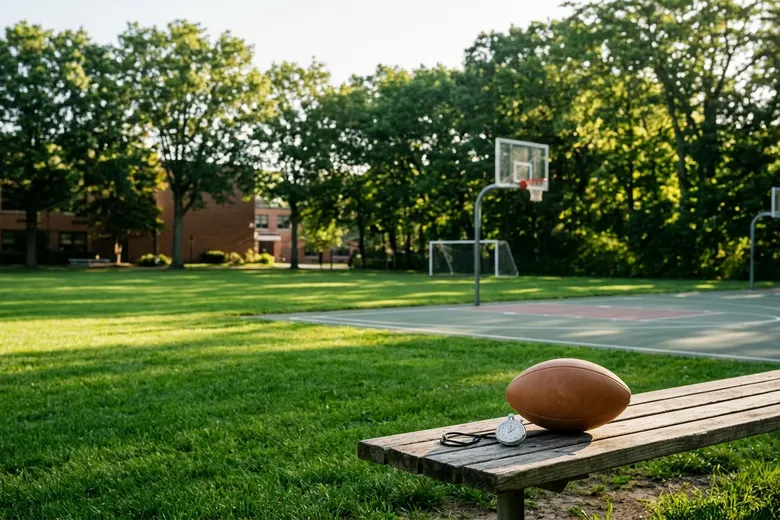
Walk past many urban school buildings today and you will notice a troubling architectural trend: multi-story concrete classrooms built right up to the property line, with no courtyard, no grass pitch, and no running track in sight. Even where playgrounds exist, recess and physical education periods are frequently shortened or canceled altogether to squeeze in extra test-preparation drills.
As an educator, I have watched this sedentary schooling model take a heavy toll on young people. We ask ten- and fourteen-year-olds to sit immobile under fluorescent lights for seven hours a day, and then express surprise when rates of classroom restlessness, anxiety, nearsightedness, and metabolic fatigue climb year after year.
"The human brain does not travel into the classroom detached from the body; movement is the biological oxygen of attention."
The Classical Ideal of Sound Mind and Sound Body
Both classical Greek philosophy and traditional Asian educational lineages understood that intellectual and physical cultivation are two halves of a single whole. When Rabindranath Tagore founded Santiniketan, or when nineteenth-century educational reformers designed campus quadrangles, they insisted that classes be paired with outdoor games, tree climbing, walking, and rhythmic exercise.
Modern exercise neuroscience has confirmed that intuition in detail. Thirty minutes of aerobic play or coordinated sport triggers the release of brain-derived neurotrophic factor, which strengthens synaptic connections in the hippocampus and prefrontal cortex. Students returning from an active outdoor recess consistently demonstrate sharper concentration and calmer emotional self-regulation during subsequent mathematics and reading lessons than peers kept indoors.
Unstructured Play Versus Early Hyper-Specialization
Just as harmful as the disappearance of school playgrounds is the commercialization of childhood sport into high-pressure, single-sport academies for seven-year-olds. When play is turned into another adult-supervised resume-building competition, children who are not early physical prodigies quickly conclude that sport is not for them and retreat to screens.
What schools and neighborhoods need most is accessible, low-cost, inclusive physical education—intramural football, cricket, track, swimming, and traditional courtyard games where every student participates regardless of athletic rank.
Beyond the stadium floodlights and broadcast rights packages, athletics remains one of the few arenas where preparation, discipline, and collective trust are tested under completely transparent rules. On dusty municipal pitches, school running tracks, and neighborhood rowing clubs, young athletes learn lessons that no textbook can replicate: how to absorb defeat without bitterness, how to subordinate individual ego to a tactical plan, and how to respect an opponent within a shared code of fair play.
Designing Schools That Let Children Move
Municipal authorities should treat access to an open playing field or rooftop athletic court as a mandatory requirement for school accreditation, on par with science labs and libraries.
When we restore daily outdoor play to childhood, we raise young people who are not only healthier in body, but clearer and happier in mind.
Protecting the integrity of sport requires safeguarding its grassroots foundations against excessive commercialization. When municipal authorities and athletic federations reinvest broadcast revenues into community coaching, affordable youth facilities, and athlete injury prevention, they keep the competitive ladder open to talent from every socioeconomic background. Sport at its finest is a civic school of character as much as a spectacle of physical excellence.
Long after the scoreboard lights are switched off and the season statistics are filed away, what remains in the memory of players and spectators alike is the integrity of the contest. Athletics teaches us that excellence is never an accident; it is the cumulative harvest of thousands of unseen mornings, shared sacrifices, and an unwavering respect for the craft itself.
In conversations with practitioners, archivists, and local residents across multiple regions, one observation recurs with striking consistency: durable progress is never achieved by shortcutting foundational maintenance. Whether in civic administration, scholarly inquiry, or community stewardship, the discipline of attending to small realities over decades is what separates thriving institutions from brittle ones. When we honor that patient craft, we build a future worthy of our shared inheritance.
More in Sports
Grassroots Cricket Academies and the Economics of Local Talent
From district maidans to regional tape-ball leagues, how community coaching networks discover tomorrow's pacers.
The Data Analysts Redefining Recovery and Longevity in Distance Running
How wearable biomechanics and sleep physiology are extending peak competitive windows for endurance athletes.
Community Stadiums as Civic Anchors in Post-Industrial Towns
Lower-division clubs are turning matchday grounds into year-round health, tutoring, and neighborhood hubs.