
Small Presses and the Survival of the Experimental Essay
How independent editors operating on modest print runs consistently discover the stylistic pioneers and Nobel laureates that conglomerate houses overlook.

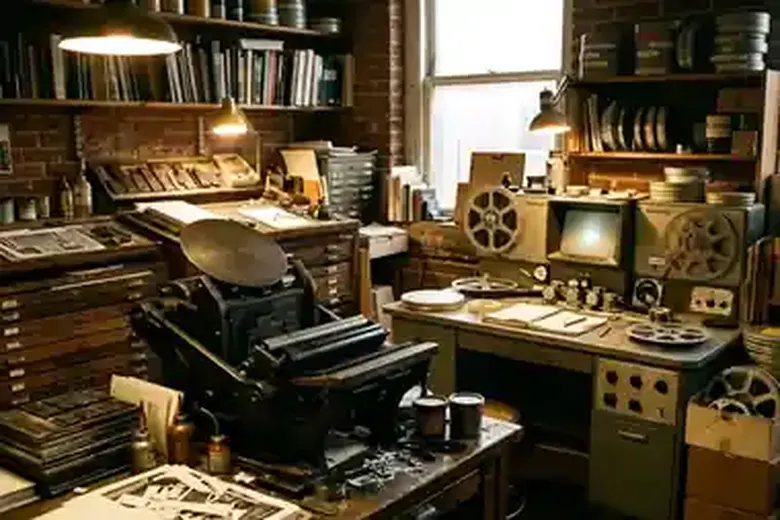
Over the past three decades, commercial book publishing consolidated into a handful of multinational conglomerates whose acquisition models rely heavily on comparable-sales algorithms. When a marketing committee evaluates a manuscript by asking what recent bestseller it resembles, truly original works of literature—books that invent their own form—face an uphill battle.
Into that breach have stepped hundreds of independent small presses, university imprints, and subscriber-supported literary houses. Operating with lean overheads, stitched paperbacks, and fierce editorial conviction, these small presses have become the primary custodians of serious fiction, poetry, and the long-form essay.
"Literary history is rarely made by committee; it is made when a single editor reads an unfamiliar manuscript at midnight and decides it must exist in print."
The Economics of the Three-Thousand-Copy Print Run
A conglomerate publisher often needs a book to sell twenty-five thousand copies in its first ninety days to justify its corporate overhead. An independent press, by contrast, can break even on an initial print run of two or three thousand copies—and keep a title in print for twenty years as word of mouth builds across university syllabi and independent bookshops.
That patience has been vindicated repeatedly: over the past decade, a striking proportion of international literary prize winners and Nobel laureates were published for years by small independent presses long before mainstream houses took notice.
Craft, Typography, and the Book as a Physical Object
Small presses have also led a renaissance in book design. By choosing acid-free cream paper, sewn bindings that lie flat on a reading desk, and thoughtful typography, they treat the book not as a disposable container for text, but as an enduring artifact meant to be passed down.
Readers respond to that care: direct subscription models, where patrons receive six or eight curated titles a year directly from an independent press, have created a stable financial base outside the traditional returnable bookstore system.
Every serious work of literature asks its reader to practice a form of attention that modern life systematically discourages: the willingness to inhabit another consciousness slowly, sentence by sentence, across hundreds of pages. Unlike polemical commentary, which flattens human beings into political categories, the novel, the poem, and the literary essay honor moral complexity, contradiction, and the quiet interiority of ordinary lives.
Why the Essay Remains Literature's Most Flexible Instrument
From Montaigne and Hazlitt to the great modern practitioners of narrative reportage, the literary essay thrives wherever writers are free to follow a question wherever it leads—blending memoir, history, and philosophical inquiry without a predetermined formula.
When local institutions, craft guilds, and independent thinkers are given the stability to work across decades rather than quarters, the entire civic fabric grows more resilient.
The survival of literary culture has always depended on a fragile republic of letters—independent small presses, translators working between vernacular traditions, public librarians, and readers who still mark margins with a pencil. By keeping classic and contemporary literature at the center of our common conversation, we safeguard the richness of our language and our capacity to imagine lives beyond our own immediate circumstance.
In conversations with field researchers, archivists, and local practitioners across multiple regions, one observation recurs with striking consistency: durable progress is never achieved by shortcutting foundational stewardship. Whether in civic administration, scholarly inquiry, or cultural preservation, the discipline of attending to lived realities over decades is what separates thriving institutions from brittle ones.
When we compare these developments across different historical eras and geographic regions, a clear lesson emerges for contemporary policymakers and citizens alike. Institutions that invest patiently in human competence, transparent record-keeping, and mutual civic obligation consistently weather external shocks far better than those that rely on short-term improvisation. Preserving that long-term perspective is the essential work of thoughtful public inquiry.
When we compare these developments across different historical eras and geographic regions, a clear lesson emerges for contemporary policymakers and citizens alike. Institutions that invest patiently in human competence, transparent record-keeping, and mutual civic obligation consistently weather external shocks far better than those that rely on short-term improvisation. Preserving that long-term perspective is the essential work of thoughtful public inquiry.
More in Literature

The case for thinking beyond the next headline
A reflective column on attention, historical proportion, and the quiet discipline of asking better questions.
In Praise of Unhurried Correspondence in an Instantaneous Age
What changes in our thinking and relationships when we trade rapid-fire chat threads for deliberate letters.

The Art of the Literary Translator: Carrying Metaphor and Silence Across Borders
Why translating a novel or poem between languages requires reconstructing cultural rhythm rather than merely substituting dictionary equivalents.